
What is Tea Meditation? Is Drinking Tea a Form of Mindfulness Meditation?
Discover Tea Meditation not just as a ritual, but as a return to awakened consciousness. In Vietnam, Tea Meditation is naturally present in every breath, needing no name but imbued with Vietnamese wisdom.
Expert Perspective: In the Vietnamese cultural structure, tea meditation is a journey of “introspection.” It’s not about demonstrating tea-making techniques, but rather a process of cultivating the mind, using the flavor of tea to anchor the mind in the present moment.
1. What is Tea Meditation? The Intersection of Consciousness and Mind
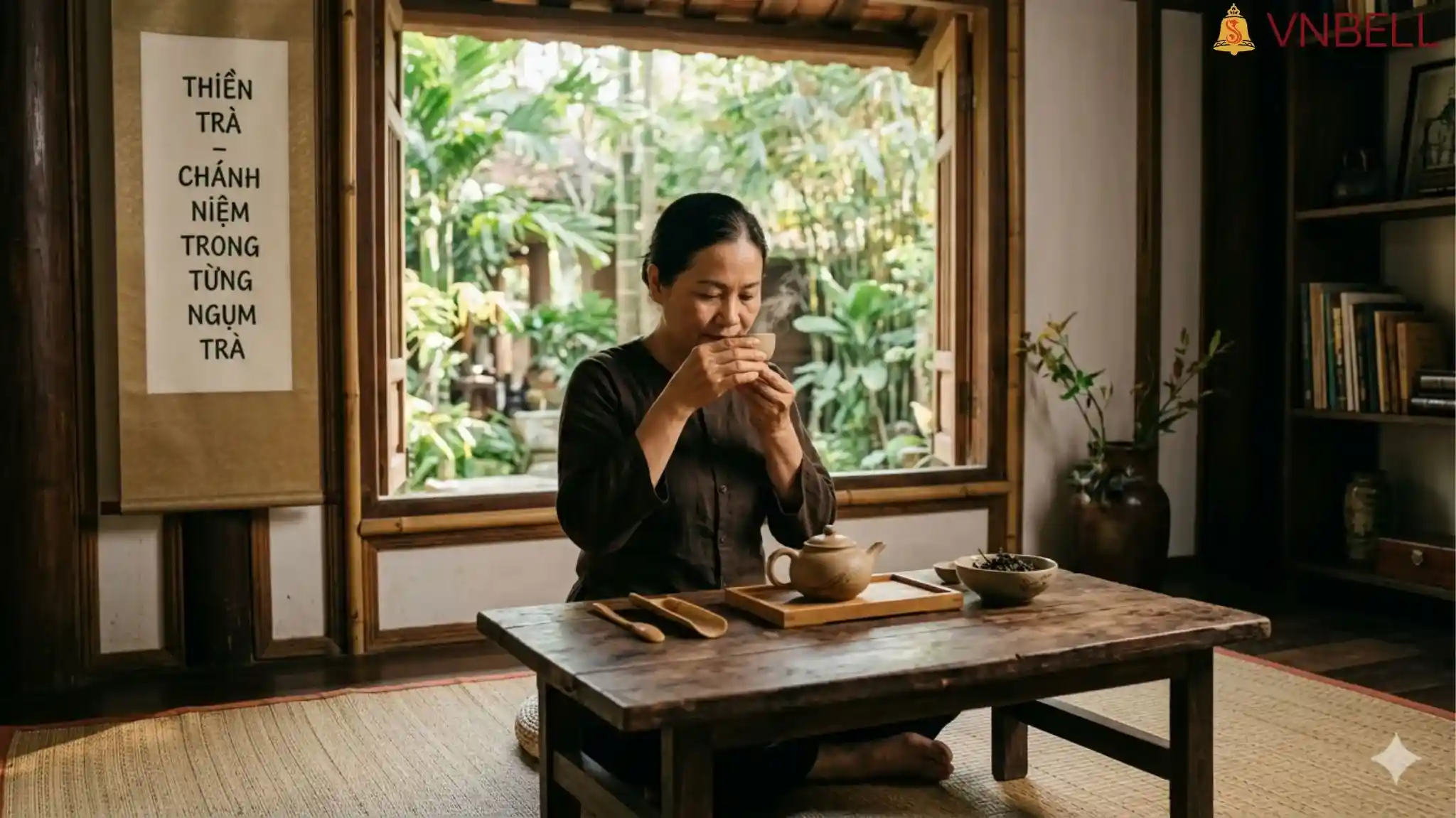
Tea meditation is the fusion of the act of enjoying tea and a state of mindfulness. While in Japan it is systematized into a strict “Tea Ceremony,” in Vietnam, tea meditation is about natural stillness.
Explanation from a scientific perspective
Why is drinking tea conducive to meditation? Modern science indicates that green tea leaves, and especially ancient Shan Tuyet tea, contain L-theanine. This rare amino acid helps increase Alpha brainwaves, creating a state of “relaxed alertness”—the perfect prerequisite for meditation.
2. Drinking tea for tranquility: Is it a form of meditation?
Meditation doesn’t necessarily require sitting in the lotus position. Meditation is when your mind is with your body as it acts. When you brew a pot of Moc Cau Tea, if you can truly see the water, smell the aroma of young rice, and feel the warmth of the tea, that is tea meditation.
“The ancient Vietnamese didn’t call it ‘tea meditation’; they simply sat quietly beside a cup of tea after a day’s work. But in that very moment, they were practicing the deepest form of mindfulness: letting go and being present.”
See also: Vietnamese tea wisdom in the way of life.
3. A Comparing Vietnamese, Japanese, and Chinese Zen Tea Ceremony

To understand indigenous tea meditation, we need to look at it within the broader East Asian context:
- Japanese Tea Ceremony: Aesthetic ritualization. Zen lies in the precision of each movement.
- Chinese Tea Art: Philosophizing the tangible. Zen lies within the interpretation of the Tao.
- Vietnamese Tea Meditation: Living in harmony with nature. Meditation lies in sincerity, simplicity, and family/neighborhood connection. (See: Vietnamese Tea Civilization).
4. Practicing Tea Meditation at Home (Mindful Living)

You don’t need a fancy tea room; tea meditation begins with kind choices:
Step 1: Choose “clean” tea for peace of mind.
Zen tea begins with purity. Prioritize Organic Tea or teas that meet VietGap standards. A pot of elegant White Tea or exquisite Dinh Tea will help calm the mind.
Step 2: The Art of Slowness
While brewing tea, instead of holding your phone, observe the tea buds unfolding. When drinking, practice these five steps: Look – Smell – Sip – Hold – Swallow. Feel the astringent taste on your tongue gradually transform into the deep, lingering sweetness of ancient tea.
5. Mindfulness tea in the modern lifestyle

In the midst of a noisy world, tea meditation is a deliberate moment of stillness. Whether it’s a pot of morning tea to start the day feeling alert, or a cup of relaxing tea at the end of the day, tea always helps you anchor your mind in the present moment.
Choosing transparent products from Fìn Hò Trà or Nghin Hanh Farm is a way to respect yourself and local cultural values.