
What is Pu-erh tea? The history, microbial fermentation process, and scientific value of this centuries-old tea.
This article is compiled from international research sources such as Wikipedia, Encyclopedia Britannica, Yunnan Agricultural University, documents on Tea-Horse Road, and microbiological studies on Pu-erh tea. Viet Hoa Tam Tra does not claim this is original knowledge, but rather a collection, systematization, and honest interpretation to provide tea lovers with a deeper and more complete understanding.
1. What is Pu-erh tea?
Pu’er tea (普洱茶 – Pu’er tea) is a type of tea originating from Yunnan Province, China, produced from Camellia sinensis var. assamica – assamica variety – a large-leaf tea variety characteristic of tropical high-altitude regions (Source: Wikipedia – Pu’er tea).
Unlike Green Tea, Black Tea, or Oolong Tea, Pu-erh tea undergoes a post-fermentation process of microbial fermentation, continuing to transform for many years after processing.
The name “Pu’er” originates from the city of Pu’er – a major tea trading center in ancient Yunnan (Source: Wikipedia – Pu’er City).
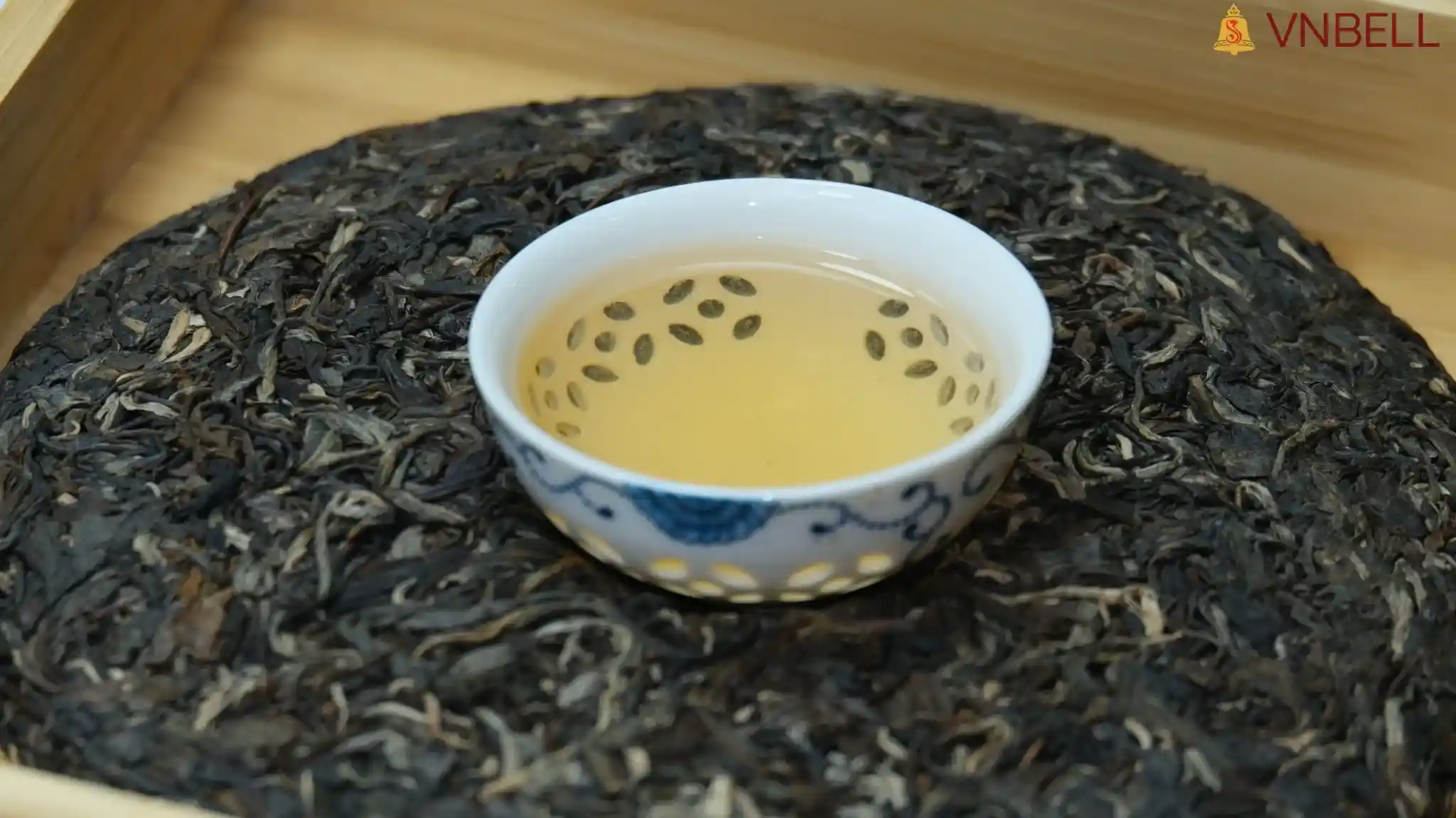
What is Pu-erh Tea? Science, History & The Art of Fermentation
2. History of Formation and the Tea-Horse Route
According to historical documents from the Tang Dynasty and studies of ancient Chinese trade, Pu-erh tea was transported via the “Tea-Horse Route” (茶马古道), connecting Yunnan with Tibet and Sichuan.
During the months-long transportation process, the tea is subjected to the effects of humidity and natural microorganisms, leading to slow fermentation. “Some scholars suggest that the long transportation period may contribute to the formation of the aged tea style.”

Illustration: Preserving Raw Fermented Pu-erh Tea Cakes (357 grams) in a Ceramic Jar. Controlling Temperature and Humidity to Enhance Microbial Transformation.
3. Sheng and Shou – Two philosophies of fermentation
3.1 Sheng Pu-erh (Living Tea)
Produced by drying and compressing tea leaves into cakes, then allowing them to age naturally for many years. Initially, it has a sharp, strong astringent taste; after 10–30 years, it becomes well-rounded and deeply sweet (Source: Yunnan Agricultural University).
3.2 Shou Pu-erh (Ripe Tea)
Developed in Kunming in the 1970s, the “wòduī” (controlled moisture composting) process simulates natural aging over several months (Source: Wikipedia – Pu’er tea).

Illustration: Holding a Traditional Tea Fruit – Fin Ho Tea.
4. Scientific analysis: Microbiome and chemical transformations in Pu-erh tea
According to studies published in the Journal of Agricultural and Food Chemistry and analysis by the Chinese Institute of Food Technology, the fermentation process of Pu-erh tea involves many microorganisms:
- Aspergillus niger
- Aspergillus glaucus
- Yeast and lactic acid bacteria strains
In a humid environment with controlled temperature (especially in Shou Pu-erh), this microbial system:
- Polyphenol breakdown
- Catechin metabolism
- Formation of theabrownin and polymerized polyphenols, contributing to the dark color and smooth feel of the water.
- Reduces harsh astringency
- Creates characteristic woody, earthy, damp earth, aged wood, and mineral aromas
Studies have also shown that the content of gallic acid and phenolic compounds changes significantly after long-term fermentation (Source: Journal of Food Science & Technology – Fermented Pu-erh Tea Studies).
In addition, the microorganisms produce supplementary oxidizing enzymes, which continue to act on the cellular structure of tea leaves during years of storage.
4.1 The chemical difference between Sheng and Shou
According to HPLC (High Performance Liquid Chromatography) analysis:
- Sheng retains a higher catechin content when young
- Shou has a higher theabrownin content due to piling
- Shou has a larger polyphenol molecular structure, creating a smoother mouthfeel
(Source: Food Chemistry Journal – Comparative Chemical Composition of Raw and Ripe Pu-erh Tea)
5. Collectible and cultural value
Some ancient tea cakes, when properly preserved, can increase in value over time. These long-standing ancient tea cakes are traded as collectibles (Source: China Tea Market Review).
When compared to White Tea or Shan Tuyet Tea, Pu-erh represents an aging and long-term preserved cultural system.
You can find more information in the category Pu-erh Tea or explore other tea varieties at the Kinh Dương Vương.vn Homepage.
6. Vietnamese Pu-erh Tea – Potential from Ancient Tea Forests

Baskets of Bamboo Following in the Footsteps of Highlanders – Carrying the Fragrance of Shan Tuyet Tea Across the Tay Con Linh Mountains
According to international geographical definitions, “Pu-erh” is the name associated with the Pu-erh region (Yunnan, China). However, biologically and technically, Pu-erh tea is made from the Camellia sinensis var. assamica – variety – a large-leaf tea variety that thrives in high-altitude tropical regions.
It is noteworthy that Vietnam – especially in Ha Giang, Yen Bai, and Tuyen Quang – possesses populations of ancient Shan Tuyet tea trees hundreds of years old, of the same large-leaved assamica variety, growing at altitudes of 1,000–2,000m.
From a botanical perspective, numerous studies by the Vietnam Academy of Agriculture and Forestry Sciences indicate that the Shan Tuyet species belongs to the large-leaved assamica group – sharing the same flora as the Yunnan region.
6.1 Is it possible to make “Pu-erh tea” in Vietnam?

Illustration: Pu-erh tea cake.
In principle, if:
- Use large-leaf assamica or ancient Shan Tuyet tea varieties
- Perform proper pre-processing of the tea leaves
- Apply post-fermentation processes (natural or controlled by microorganisms)
- Store under suitable conditions for many years
It is entirely possible to create a post-fermentation tea line similar to the Sheng Pu-erh style.
However, in terms of international trade, it needs to be clear that the product should be called: “Post-fermented dark tea from ancient Vietnamese tea trees” or “Vietnamese aged dark tea”
instead of using the geographical indication Pu-erh.
6.2 Vietnam’s advantages
Vietnam possesses the qualities that the world is looking for:
- Natural Wild Forest Tea
- Ancient Shan Tuyet Tea Trees
- Highland climate with lots of fog
- Traditional hand-processing techniques
If properly researched and developed, Vietnam could absolutely build a product system:
- Naturally aged ancient tea
- Controlled fermentation tea using an improved wòduī model
- Tea stored for 5–10–20 years
6.3 Bringing Vietnamese tea to the world – A feasible path.
Instead of copying, Vietnam could:
- Establishing a unique identifier for Shan Tuyet post-fermented tea
- Standardizing processes and transparently publishing microbiological research
- Connecting with the international market for collecting aged teas
- Combining tea experiences and experiential tourism
Viet Hoa Tam Tra believes that true value lies not in borrowing a name, but in properly exploiting the potential of ancient Vietnamese tea trees and developing it honestly, scientifically, and sustainably.
If you are interested in Vietnamese ancient tea varieties, you can refer to: Pu-erh Tea (Vietnamese version), Shan Tuyet Tea, or explore the transparent journey at Journey & Guarantee.
Bringing Vietnamese tea to the world isn’t about grand pronouncements, but about genuine quality, genuine time, and a true story.
Reference source
- Wikipedia – Pu’er Tea
- Wikipedia – Pu’er City
- Encyclopedia Britannica – Tea Processing
- Yunnan Agricultural University Research Publications
- Journal of Agricultural and Food Chemistry
- Food Chemistry Journal – Fermented Tea Studies
- China Tea Historical Trade Archives
Kinh Dương Vương .vn chooses a path of knowledge transparency – sharing with attribution – to learn together with tea lovers instead of claiming to be the creator.