
The Art of Using Vietnamese Tea Culture: An Undercurrent of Culture within the “National Water” Flow
“Enjoy this delicious, slightly bitter tea – Remember the beauty of the land and its people, never forget their kindness.”
In his monumental research work “Vietnamese Tea Civilization,” scientist Trinh Quang Dung identified tea as the “National Water.” If court tea represents elegance and ritual, then the folk art of tea drinking is the powerful underground stream that has nourished the Vietnamese soul for over 5000 years. From the green tea brewed over a wood fire in the midlands, the bittersweet tea from Nghe An, to the modern iced tea served on the sidewalk, all create a colorful, simple yet profound cultural tapestry.
1. The philosophy of “plant civilization” in traditional Vietnamese desserts.
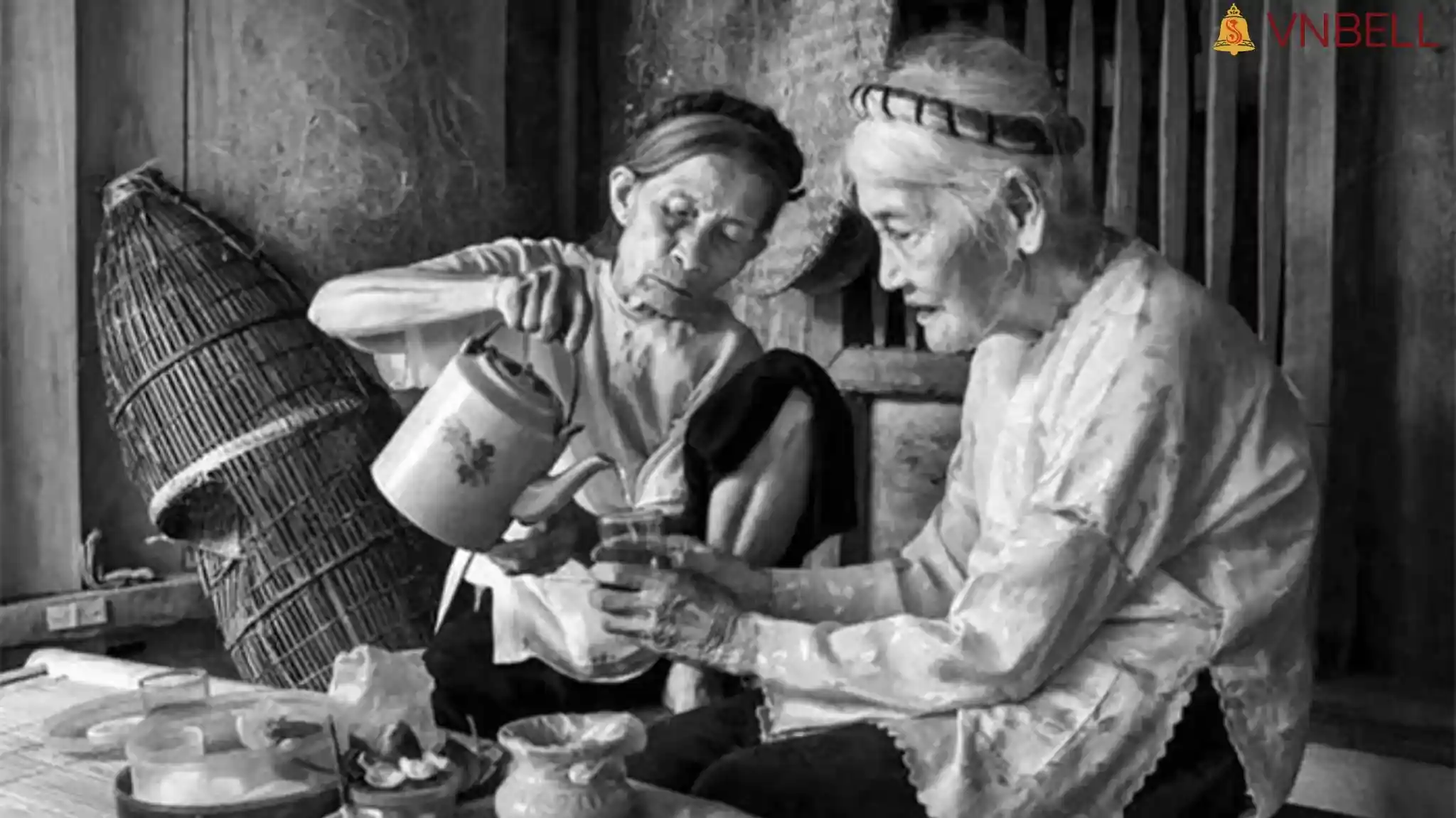
The Vietnamese people belong to the rice-farming civilization, or more broadly, the plant civilization. The art of traditional tea drinking is inseparable from its living environment. Tea plants growing by ponds, in garden corners, or in the vast forests of Northwest Vietnam are all utilized with respect by the people.
Unlike other tea cultures that typically use dried tea leaves, Vietnamese people have a habit of drinking fresh tea (green tea). This is the most “original” way of drinking tea, preserving the full vitality of nature. Gently rolling the tea leaves before brewing is not simply a technique; it’s a way of harmonizing human intervention with the treasures of nature. To better understand this foundation, you should refer to the article: Vietnamese Tea Civilization: Origins & Thousand-Year-Old Wisdom.
2. Fresh tea from Northern and Central Vietnam: A symphony of fire and water.

2.1. The art of choosing tea and water.
In regions like Thai Nguyen and Phu Tho, people prefer large, thick leaves of midland tea. The water used to brew the tea must be well water or clear rainwater. The tea brewing pot is usually made of earthenware or porcelain to retain heat for a long time.
2.2. Techniques for “Om” and “Hắm” (steeping) fresh tea leaves.
Connoisseurs never boil tea leaves vigorously on the stove for too long, as this will turn the water red and cause it to lose its aroma. The traditional method includes: washing the tea leaves with warm water to “awaken” them; gently rubbing them to break the cells containing essential oils; placing them in a teapot and pouring in just enough boiling water; and covering the pot tightly with straw or burlap. A perfect cup of green tea should have a honey-yellow color, bubbling foam, and a rich aroma of fresh leaves.
3. Tea with herbs from Nghe An – A unique specialty of Central Vietnam.

Venturing deeper into Central Vietnam, we encounter a powerful variation: Chè đâm (Nghe An, Ha Tinh). This is an indispensable part of the folk tea-drinking art of this sun-drenched, windy land.
Green tea leaves are placed in a small stone mortar and pounded until a thick, dark green sap is extracted. Then, boiling water is added. The resulting tea has a deep green color, a slightly bitter taste that tingles the tongue, but is followed by an intensely sweet aftertaste. People in Central Vietnam often drink this tea with Cu Đơ candy (peanut candy with rice crackers). The spiciness of ginger, the sweetness of molasses, and the bitterness of the tea create a perfect balance of yin and yang.
4. Bitter Gourd Tea, Voi Tea – Traditional health-promoting variations – Vietnamese Tea Culture

The art of traditional tea drinking is not limited to the tea plant (Camellia sinensis). Our ancestors, with their medical knowledge, utilized all kinds of herbs that were beneficial to health.
- Bitter Tea (Quang Tri): Considered a “miracle cure” for postpartum women, it helps increase milk production and cool the body. The subtly bitter taste of bitter tea is a characteristic feature of the fiery land of Quang Tri.
- Vối Tea: From the buds to the leaves of the vối plant, all parts are used. Vối tea has excellent digestive benefits after meals high in fat. This is the “national cooling drink” in the villages of the Northern Delta.
Today, we continue this spirit of health-promoting tea through our catalog of Detox Tea and Herbal Tea at Viet Hoa Tam Tra.
5. Phu Hoi Tea and Southern Iced Tea – The Free-spiritedness of the South
Upon arriving in Southern Vietnam, tea embodies the character of the people there: open-minded and practical. Phu Hoi Tea (Nhon Trach) is an ancient tea heritage of the Southern region with a rich and distinctive flavor.
In particular, “Iced Tea” – a product of modern times but deeply rooted in folk traditions. In Saigon or the provinces of the Mekong Delta, iced tea is not just for quenching thirst; it’s a “free” cultural expression of human kindness. The charitable iced tea dispensers along the roadside are proof of the spirit of Tea – Humanity – Righteousness that Viet Hoa Tam Tra always cherishes.
6. “Lemon Tea and Casual Conversation” – The continuation of traditional tea culture among young people.

Don’t underestimate street-side lemon tea. It’s a transformation of the traditional art of tea drinking, adapting to the times. The essence of “chatting” over a glass of lemon tea is the image of “tea as the first cup of conversation” from our ancestors. It satisfies the need for connection and communication – the core of Vietnamese tea culture.
However, to protect health, the current trend is to use high-quality base tea. Many modern tea shops have started using La Bang Green Tea or premium tea bags from farms for brewing.
7. From traditional folk tea to premium tea: A journey of kindness.

At Viet Hoa Tam Tra, we believe that whether you drink a bowl of fresh green tea or a cup of Premium Dinh Tea, the most important value remains **Truth**. The tea must be clean from the source.
We traveled throughout the raw material regions, from Fìn Hò Trà of the Red Dao ethnic group to farms in Thai Nguyen such as Nghin Hanh Farm, to rediscover the original flavor of traditional tea but with modern, clean standards.
You can learn more about the differences between tea varieties at: Distinguishing Vietnamese Tea Types: Aroma, Color, and Character.
8. Conclusion: Traditional tea – A living heritage that needs preservation.
The Vietnamese folk art of tea drinking is the most vivid testament to the enduring vitality of the nation. It doesn’t need air-conditioned tea rooms or expensive tea utensils. It only needs a sincere heart and a clean tea bud.
Let’s join Viet Hoa Tam Tra in preserving this beauty by supporting ethical tea farms and artisans who are working day and night to preserve the essence of “National Water”.
DISCOVER THE WORLD OF ESSENTIAL VIETNAMESE TEA
Discover our internationally certified tea lines:
EU Organic Tea |
Shan Tuyet Ancient Tree Tea |
Traditional Flower-Infused Tea
Professional Content Advisor: Viet Hoa Tam Tra
Based on research material: “The Wisdom of the Origins of Vietnamese Tea” – Scientist Trinh Quang Dung.