
Lac Yen Tea Handcrafted Matcha Farm – When young people choose to make clean tea from the source.
Lac Yen Tea Matcha Farm didn’t start with a grand business plan, but with a very down-to-earth choice: leaving the city, returning to the countryside, making tea in a slow, kind way, and putting the heart of the grower above yield.
In the heart of La Bang – Thai Nguyen region, famous for its rich-flavored, deeply sweet Thai Nguyen teas, the young couple Yen and Hiep have chosen a more challenging path: producing clean tea from the source, starting from the soil, from the way they care for the plants, and from being honest with nature.

Before dedicating herself to tea cultivation, Yen studied fine arts – familiar with color, composition, and the tranquility of creative expression. Perhaps this foundation greatly influenced her later approach to tea making: slow, meticulous, and always prioritizing the drinker’s experience.
1. Organic farming – a difficult, but necessary, choice.
Over 1 hectare of tea at Lac Yen Tea is cared for according to organic farming practices, without the use of chemical pesticides, inorganic fertilizers, or growth stimulants.
The soil is fertilized with organic matter, and grass is kept at just the right level to maintain ecological balance. The small organisms in the tea garden – insects, microorganisms, wild herbs – are not destroyed, but are considered part of the natural cycle.
For Yen and Hiep, making clean tea isn’t about labeling or chasing certifications, but simply about having peace of mind knowing their own family drinks it every day. This is also the shared spirit of those who genuinely pursue organic tea.

2. Using a mesh to allow the tea leaves to settle before harvesting.
Approximately three weeks before each harvest, the entire tea plantation is covered with netting to reduce the intensity of direct sunlight. This is a common technique in the production of high-quality matcha, helping to soften the tea leaves, reduce bitterness, and increase chlorophyll content.
Using netting means accepting lower yields, higher costs, and more care. But in return, the resulting raw material is highly stable, making it very suitable for processing tea-based products such as matcha powder for direct consumption.
3. Handmade matcha, time-consuming
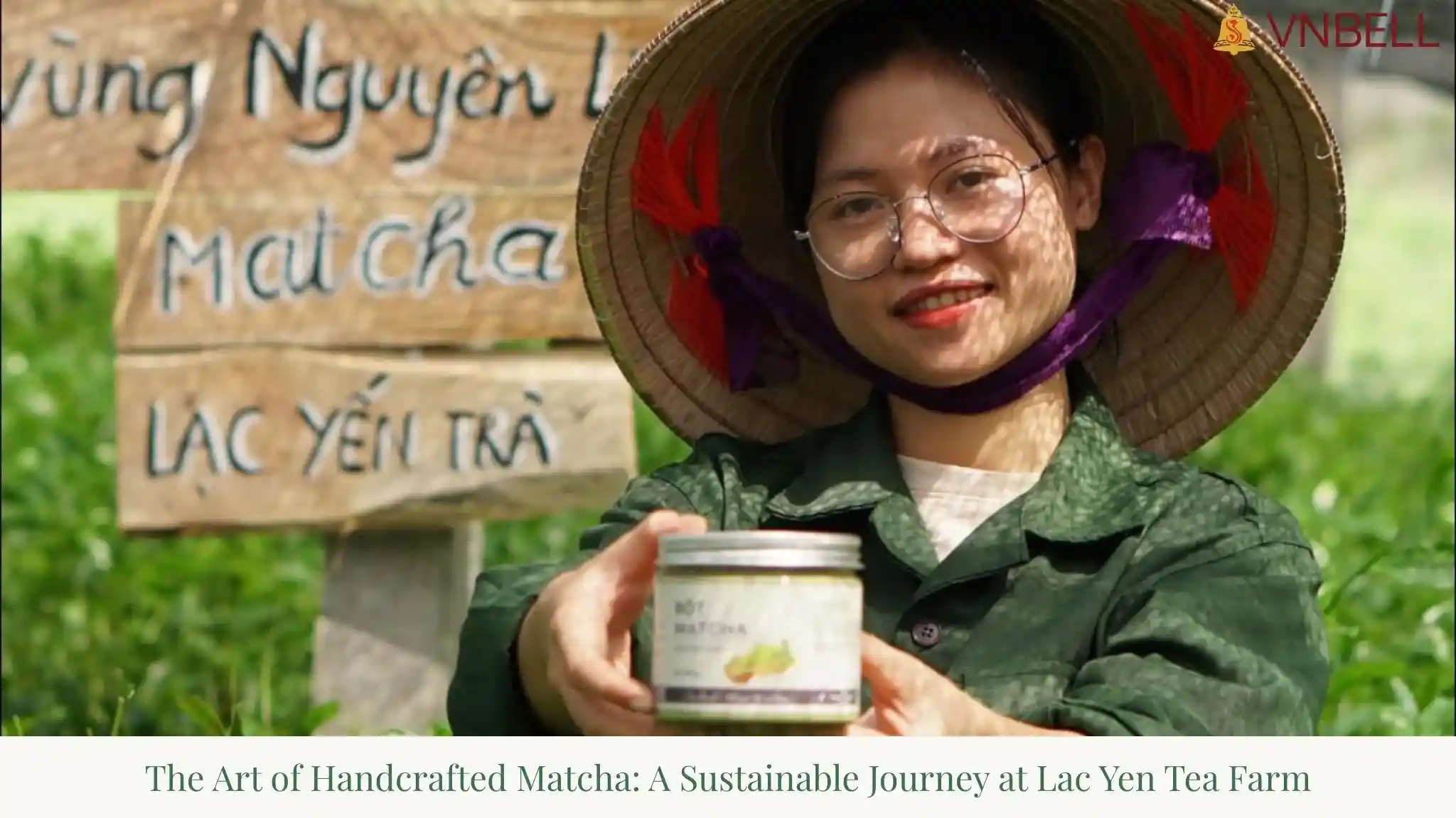
The tea buds are hand-picked, carefully selected from healthy young leaves. Then, the tea undergoes several processes:
- Steam to fix the natural green color.
- Dry gently at low temperature.
- Completely separate the leaf veins.
- Slow grinding using a traditional granite mortar and pestle.
The slow grinding speed prevents the matcha powder from getting hot, preserving the fresh tea aroma, sweet aftertaste, and natural green color – clear signs of pure matcha.
4. Make tea with kindness – Handcrafted Matcha.
Matcha Lac Yen Tea is not made in large quantities or quickly. Each batch of matcha is strictly controlled, undergoes quality testing at Natek, and is only sold when the maker feels completely confident in its quality.
That kindness has brought Lac Yen Tea closer to the community of clean tea lovers, and has been recognized by VTV3 as a young, resilient, and humane agricultural startup model.

Conclusion
Lac Yen Matcha Farm doesn’t tell a grand story. It simply quietly produces clean tea, preserves fertile land, nurtures healthy plants, and believes that those who drink it will feel the difference for themselves.
With Vnbell, this is a farm that truly embodies the spirit of: real tea – real people – real value.