
What is white tea? The most minimalist type of tea and its philosophy of harmony with nature.
White tea is considered one of the oldest and purest types of tea in the East Asian tea system. Without elaborate techniques or deep intervention into the tea leaf structure, white tea represents a unique tea-making philosophy: following nature and allowing time to perfect the tea.
In this article, VNBELL will help you understand what white tea is, how to distinguish white tea from other types of tea, and the true place of white tea in Vietnamese tea-drinking culture.
What is white tea?
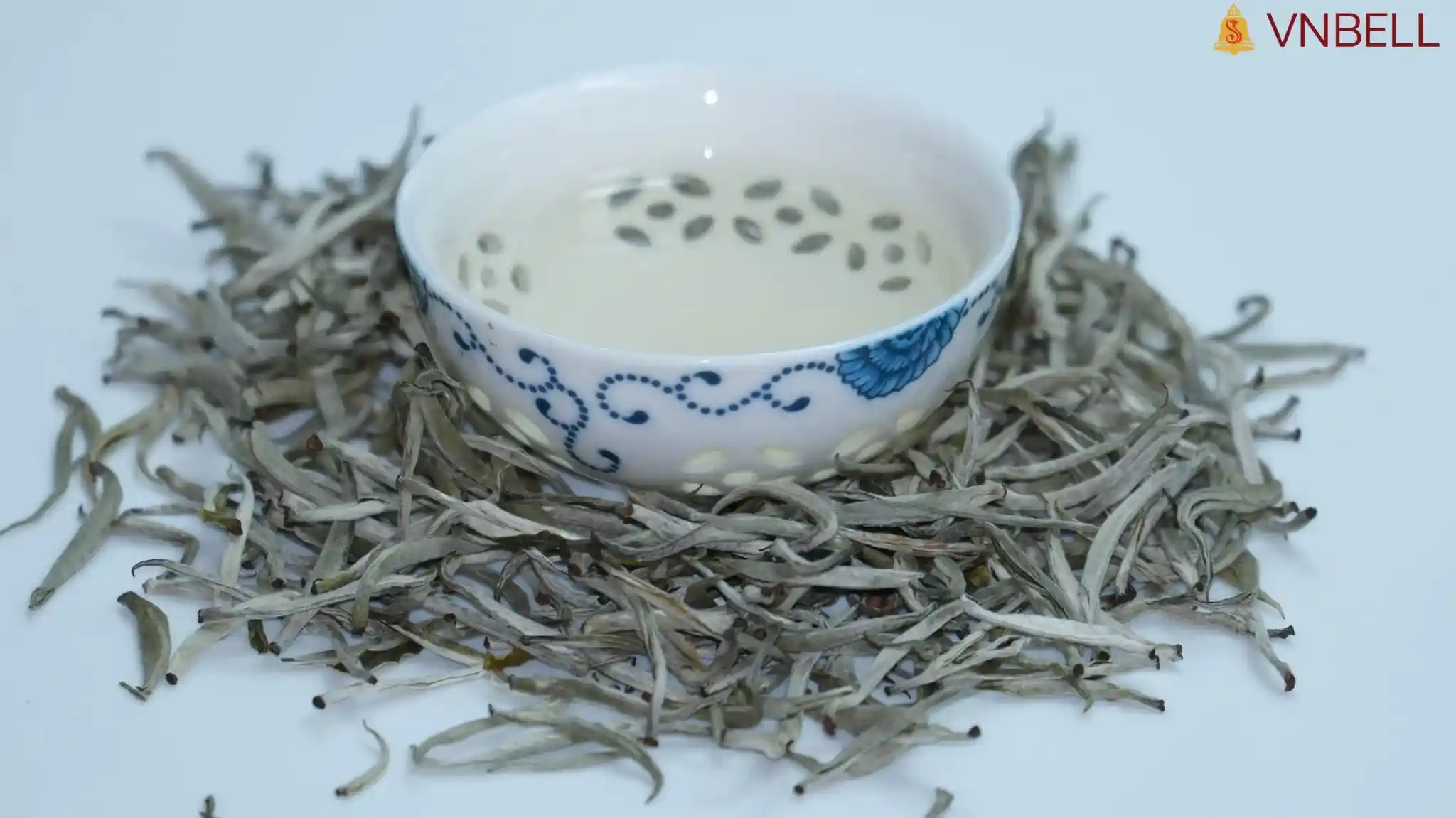
White tea (白茶 – Bach Cha) is a type of tea that undergoes the least amount of processing among all traditional teas. After harvesting, the tea leaves undergo almost only two main stages: natural wilting and gentle drying, without strong kneading or premature enzyme destruction.
As a result, white tea undergoes only very mild oxidation (usually below 10–15%), retaining almost entirely the original structure of the tea leaf, polyphenol compounds, and the natural gases of the tea plant.
The name “white tea” derives from multiple layers of meaning. First, it refers to the silvery-white downy hairs covering the young tea buds – a sign of carefully selected raw materials, usually only found in ancient tea varieties or slow-growing tea plants in high mountains with cool climates. Furthermore, after brewing, white tea has a clear white to pale yellow color, light and refreshing, distinctly different from the yellowish-green of green tea or the amber color of black tea. This bright, pure, and non-cloudy color, along with the soft, sweet, and tranquil taste, contributes to the name “white” – symbolizing the purity, simplicity, and originality of this tea.
How does white tea differ from green tea, red tea, and yellow tea?


If green tea focuses on early enzyme inactivation to preserve the color and fresh taste, red tea and black tea follow a direction of high oxidation to create a rich flavor structure, then white tea stands at the opposite extreme. Other: non-interference – non-coercion.
Compared to yellow tea – which has a controlled “yellow fermentation” stage – white tea is even more minimalist. It is this minimalism that makes white tea a superior tea:
- Difficult to get right
- Easily misunderstood as “bland”
- But it has the potential to change very clearly over time
The flavor and aroma of white tea


White tea doesn’t aim for an explosive aroma or strong flavor from the first sip. The tea typically has:
- Light aroma of dried grass, white flowers, and pale honey
- Clean taste, less astringent, with a lingering sweetness
- Feels comfortable even after drinking for a long time
Therefore, white tea is very suitable for evening tea, or for those seeking relaxing tea, gentle on the stomach and naturally calming.
White tea and the value of time
A very special characteristic of white tea is its ability to undergo post-fermentation over time. When properly stored, white tea can:
- Reduces the unripe taste
- Increases sweetness and roundness
- Develops flavor depth
This is precisely why white tea is often grouped with Pu-erh tea in the concept of “tea of time”, and is also suitable for feng shui display spaces.
White tea in the Vietnamese tea system


In Vietnam, white tea is usually made from Shan Tuyet tea leaves grown in high mountainous regions – where tea plants grow slowly, with thick buds and many fine hairs. Properly brewed Shan Tuyet white tea usually have a distinct tea aroma, and the drink is deep and lasting.
At Viet Hoa Tam Tra, White Tea is selected from clean tea farms, prioritizing organic tea and handcrafted tea by artisans.
Understanding white tea is not just about understanding a type of tea, but about learning to slow down, listen, and let nature guide you – the true spirit of sustainable Vietnamese tea.