
Eliminating Pests and Diseases with Clean Water – The Path to Chemical Free Tea Cultivation at Thu Luan Tea Farm
The method of eliminating pests and diseases using clean water at Thu Luan Tea Farm is not just a farming technique, but the result of understanding the plants, understanding the soil, and a firm decision to say no to chemicals. This is a vivid testament to the direction of organic tea cultivation in Thai Nguyen.
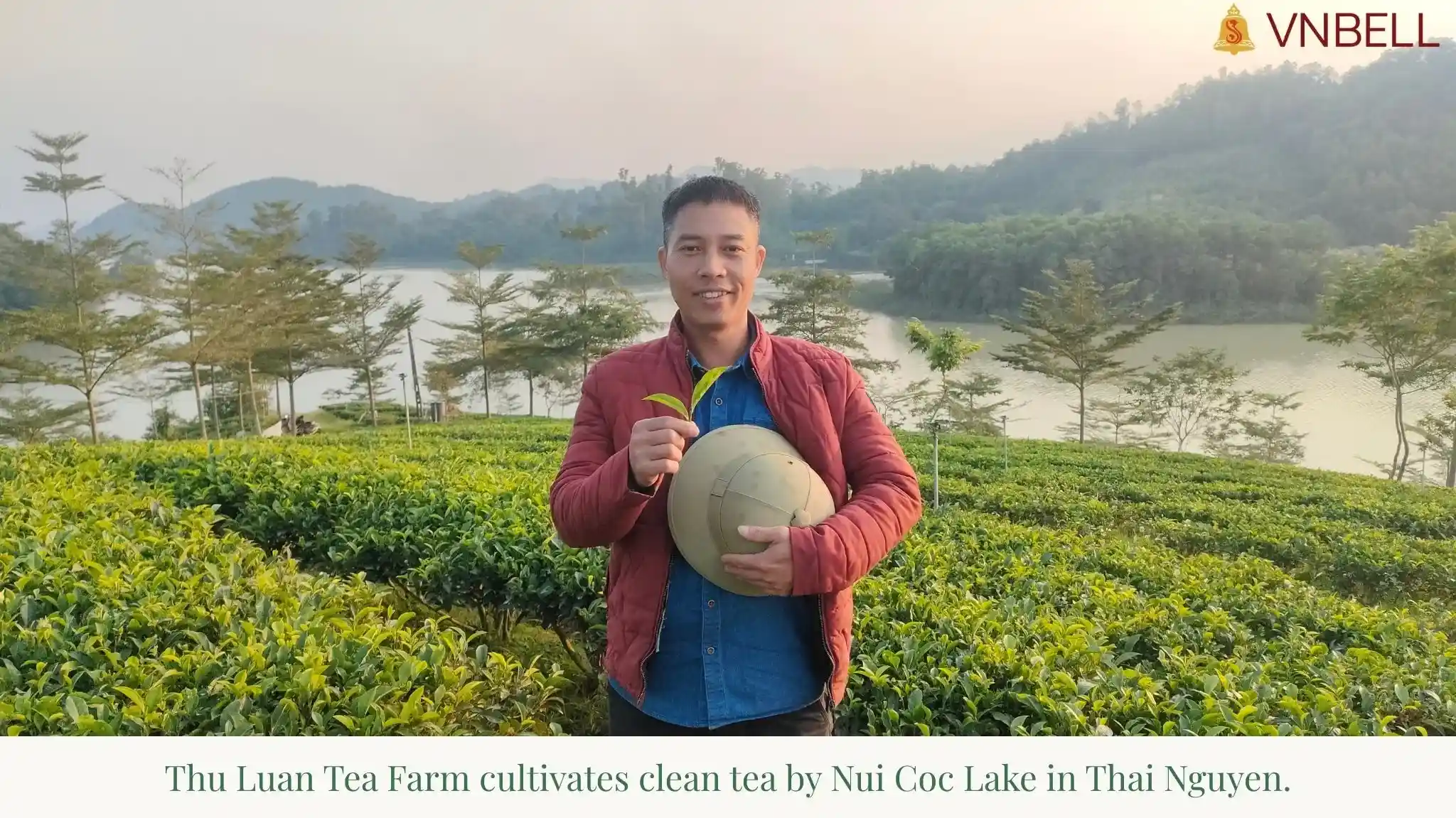
Located on a hillside near Lake Nui Coc, in the heart of the Thai Nguyen tea region, Dang Van Luan’s farm has chosen a different path: not chasing yield, not relying on pesticides, but taking clean water, perseverance, and a self-balancing ecosystem as its roots.
1. When pests become a question of farming practices.
Like many other tea plantations, Mr. Luan’s tea garden once faced pests and diseases, especially stink bugs nesting on the tea canopy. The leaves turned dark, the buds became deformed, directly affecting the quality of the green tea, hook tea, and young shrimp tea varieties.
Instead of using pesticides – the familiar path of mass production – Mr. Luan paused and asked himself: “Is there a way to clean the tea plants without harming the soil, the water, and the growers themselves?”

2. High-pressure water spray – Simple yet effective
Mr. Luan’s solution is very simple: using clean water with high pressure to wash away pests from the tea plants.
- Spray high-pressure water directly onto each tea row.
- Stretch a net barrier on the opposite side.
- Worms, insect eggs, and dirt are dislodged from the tea leaves.
After each spraying, the tea plants are “washed clean”: the leaves are clean, the buds are airy, and their photosynthetic capacity is restored. More importantly, not a single drop of chemicals penetrates the soil and water sources – a prerequisite for creating organic tea and VietGAP tea.
3. Irrigation farming – restoring the tea plantation ecosystem.

This method has been maintained regularly every 7 days for over 4 and a half years. The water used is clean well water from the Nui Coc Lake area, combined with well-rotted manure and bio-fertilizer.
- Loose, porous soil is ideal for the growth of microorganisms in tea plantations.
- Healthy tea plants with minimal pest and disease recurrence.
- The growers are not exposed to harmful chemicals.
- The tea has consistent quality, a long-lasting flavor, and a deep, lingering sweetness.
This foundation makes Thu Luan tea suitable for processing into many varieties: from white tea, red tea, to black tea and tea-based products.
.
4. A suggestion for sustainable tea farming.

The model of Thu Luan Tea Farm is not intended for mass replication, but it offers valuable insights for small-scale clean agriculture:
- Low investment cost
- Easy to apply
- Chemical-free
- Suitable for regenerative agriculture
Conclude
Mr. Dang Van Luan makes tea quietly, without fancy labels or loud advertising. He only adheres to one principle: the tea must be clean from the soil, from the water, and from how people treat the plants.
With each passing season, the tea buds from Thu Luan hill grow healthier and their flavor becomes fuller – a silent response from the tea plant to the growers who understand and respect it.